
What is closed rhinoplasty?
Closed rhinoplasty is a surgical technique where all incisions are made inside the nostrils, leaving no visible external scars. The goal is to reshape the nose to achieve better harmony with the face while, in suitable patients, also improving breathing function.
Through this technique, the nasal bones and cartilage can be reshaped, the tip can be refined and supported, the bridge can be straightened, and functional issues like septal deviation can be addressed.
Modern closed rhinoplasty is distinguished not only by its scarless nature but also by limited tissue dissection, preservation of natural columellar anatomy, and faster resolution of postoperative swelling. In appropriately selected anatomy, recovery comfort can be higher than with open technique.
Who is a candidate?
You may be a suitable candidate if you have a dorsal hump or bridge irregularity, tip drooping or asymmetry, wide nasal bones, deviation or post-trauma deformity, or a general sense of disharmony between your nose and facial features. Patients combining aesthetic goals with functional breathing concerns can also be addressed in the same operation.
Suitability depends on nasal anatomy, skin thickness, cartilage-bone structure, prior surgery, and intended changes. Evaluation includes skin thickness assessment (thick-skinned patients require a different approach than thin-skinned), septal deviation, lateral cartilage architecture, bone strength, and history of nasal trauma or surgery. Patients aged 17-18 and older with completed nasal development can be planned. International patients undergo video consultation prior to travel to confirm candidacy.
Closed vs. open rhinoplasty
In closed rhinoplasty, all incisions are internal, so there is no external scar. Tissue dissection may be more limited, and swelling can resolve more quickly in some patients.
In open rhinoplasty, a small incision is made on the columella (the column of skin between the nostrils), providing wider visibility — particularly valuable for complex tip work, revisions, or advanced deformities.
The choice depends on nasal anatomy, the changes planned, the surgeon's expertise, and criteria for safe outcomes.
Preoperative preparation
Smoking must be stopped at least 4 weeks before surgery. Smoking impairs nasal skin microcirculation, delays wound healing, and increases the risk of skin necrosis. Even passive smoke should be minimized.
Blood-thinning medications (aspirin, ibuprofen, NSAIDs) are stopped 10 days before surgery. Vitamin E, fish oil, ginkgo biloba, ginseng and similar supplements are stopped on the same schedule — they increase perioperative bleeding risk. Hormonal medications and contraceptives should be discussed with the anesthesia team.
Standard preoperative tests: complete blood count, biochemistry, coagulation, ECG. In patients with prior nasal surgery or suspected structural concerns, paranasal sinus CT may be ordered to evaluate internal anatomy and septum.
The surgery
Closed rhinoplasty is performed under general anesthesia in an accredited hospital. Operative time depends on the scope of planned changes, averaging 1.5-3 hours. Hospital stay is typically 1 night, occasionally same-day discharge.
A thermoplastic splint is placed on the nasal bridge at the conclusion of surgery. The splint limits swelling, supports bone structure in its new position, and protects against external trauma. The splint stays in place for 7 days. Internal packing is not mandatory; soft internal splints may be used per surgical plan and removed at days 5-7.
In modern technique, piezo (ultrasonic) instrumentation may be used. Piezo reshapes bone with micro-vibrations rather than impact, sparing surrounding soft tissues. This significantly reduces postoperative swelling and bruising. Piezo is used selectively based on structural indication.
Recovery timeline
First 3 days: Mild-to-moderate swelling and periorbital bruising. Sleeping with the head elevated (45 degrees) reduces swelling. Saline nasal spray is recommended for nasal hygiene.
Days 3-7: Swelling decreases gradually, bruising fades to yellow. Splint and internal stents are removed at day 7. The first shape of the nose is visible at this stage but not the final result.
Weeks 2-3: Appropriate time to return to social activities. Light makeup can be used. Swelling persists especially at the tip and bone areas. Light exercise (walking, stationary cycling) can begin.
Weeks 4-6: Vigorous exercise (running, fitness) becomes safe. Contact sports (boxing, football, basketball) should be avoided for at least 6 weeks. Glasses wearers should avoid resting glasses on the nose for the first 6-8 weeks; tape-supported elevation may be used.
Months 3-6: 70-80% of swelling resolves. Tip swelling is the slowest to resolve.
1-1.5 years: Final result settles. In thick-skinned patients, this period may extend to 1.5-2 years; patience is essential.
Risks and complications
Modern rhinoplasty is a safe procedure but, like any surgery, has potential risks. Informed decisions require evaluation of these risks.
Early-period risks: Bleeding (1-2%), infection (under 1%), septal hematoma, transient nasal congestion. Smokers see significantly elevated risk.
Late-period risks: Asymmetric swelling, undesired tip contour, recurrent septal deviation, internal valve issues, transient reduction in sense of smell. Most resolve over time; a small percentage may require revision.
Aesthetic risks: In thick-skinned patients, the final result may settle later than expected; tip fullness may persist for an extended period. If the final contour differs from expectations, revision (secondary rhinoplasty) may be required; international literature reports an average revision rate of 5-15%.
Closed rhinoplasty in Istanbul — Assoc. Prof. Dr. Ayhan Işık Erdal's practice
Dr. Erdal's private clinic is located in central Istanbul, in the Nisantasi district — Istanbul's premier neighborhood for plastic surgery and luxury services. Address: Teşvikiye Cad. No:9/12, Istanbul. The clinic is easily accessible from major Istanbul hotels and from Istanbul Airport (IST) and Sabiha Gökçen Airport (SAW).
Istanbul has become a leading destination for rhinoplasty worldwide. International patients choose Istanbul for the combination of board-certified plastic surgeons specializing in rhinoplasty, modern accredited hospitals, competitive pricing compared to Western Europe and the US, and the cultural-tourism appeal of the city.
Dr. Erdal's Istanbul practice is structured to provide international patients with seamless coordination: video consultation prior to travel, airport-hotel transfer, English-speaking medical team, accommodation arrangements at partner hotels near the clinic, and full postoperative follow-up. The Istanbul-based clinic offers 3D nose simulation during in-person consultation so patients can evaluate the planned outcome visually before surgery.
Patients typically stay in Istanbul for 7-10 days following rhinoplasty surgery — sufficient time for splint removal at day 7 and clearance for safe travel home. WhatsApp consultations are available at +90 544 850 72 32 for international inquiries.
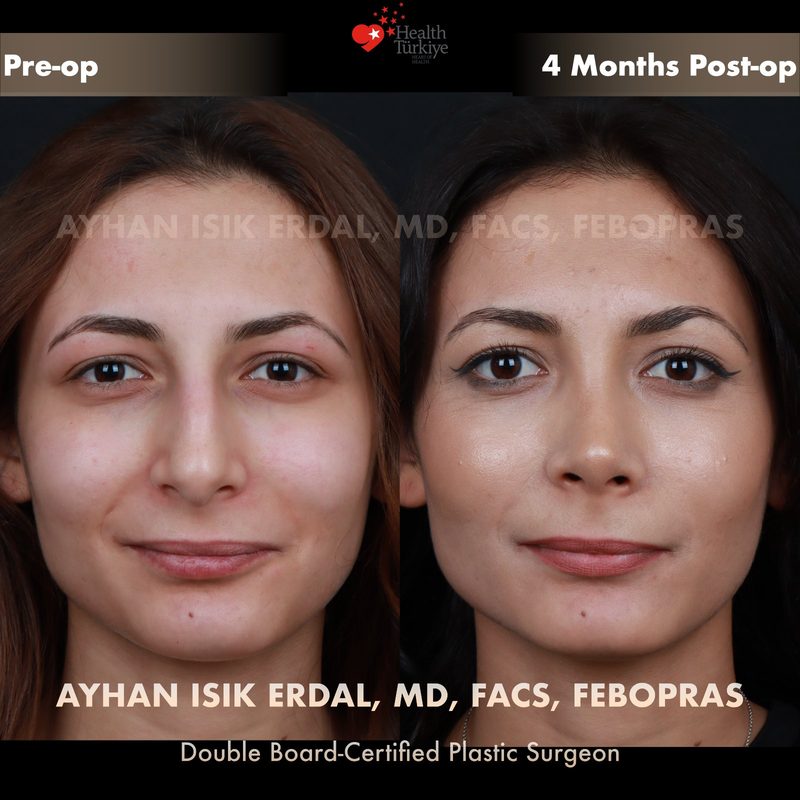
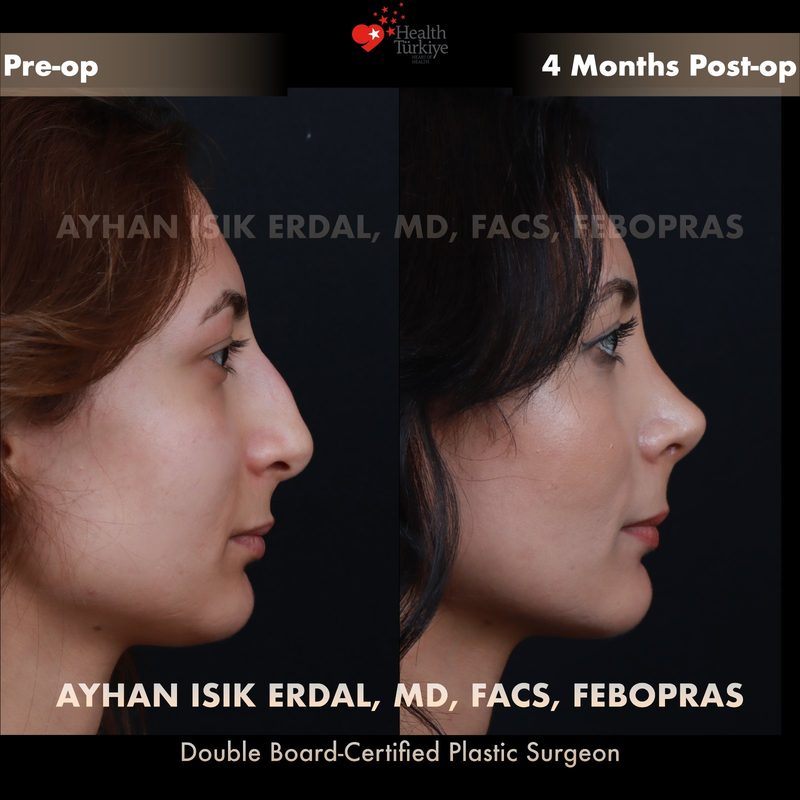
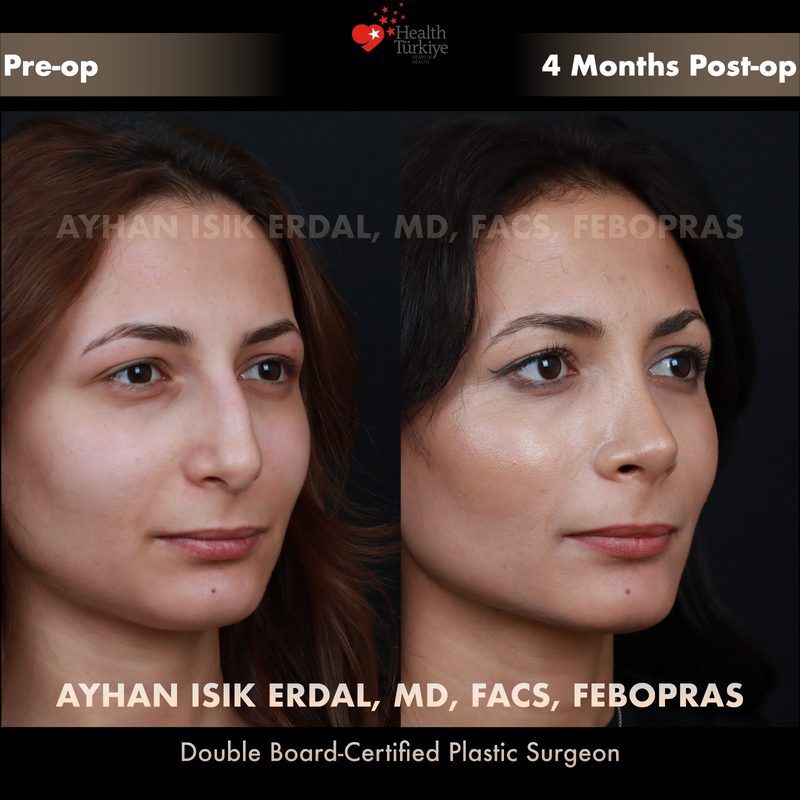
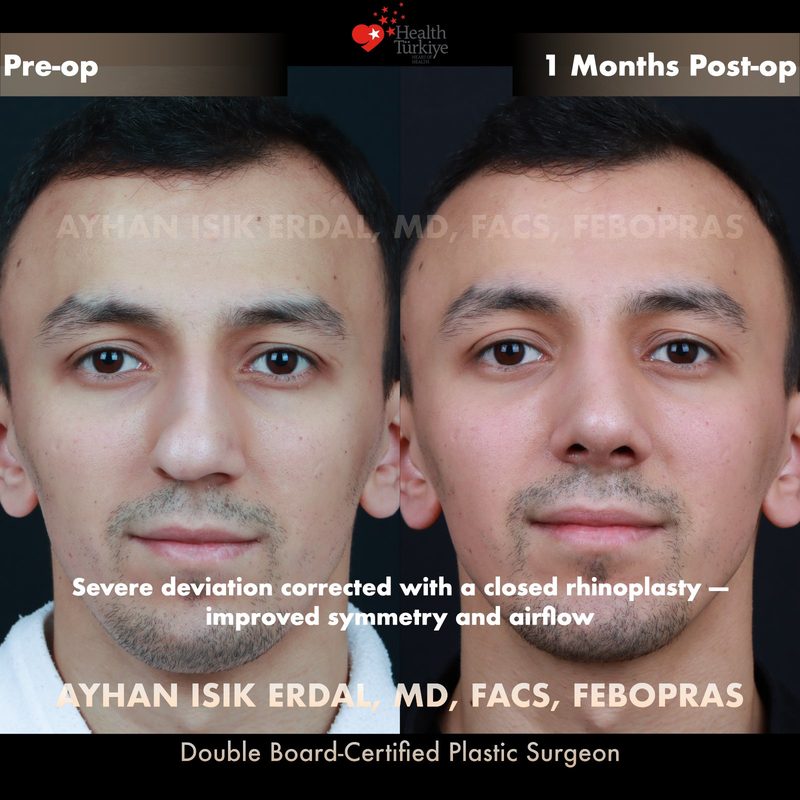
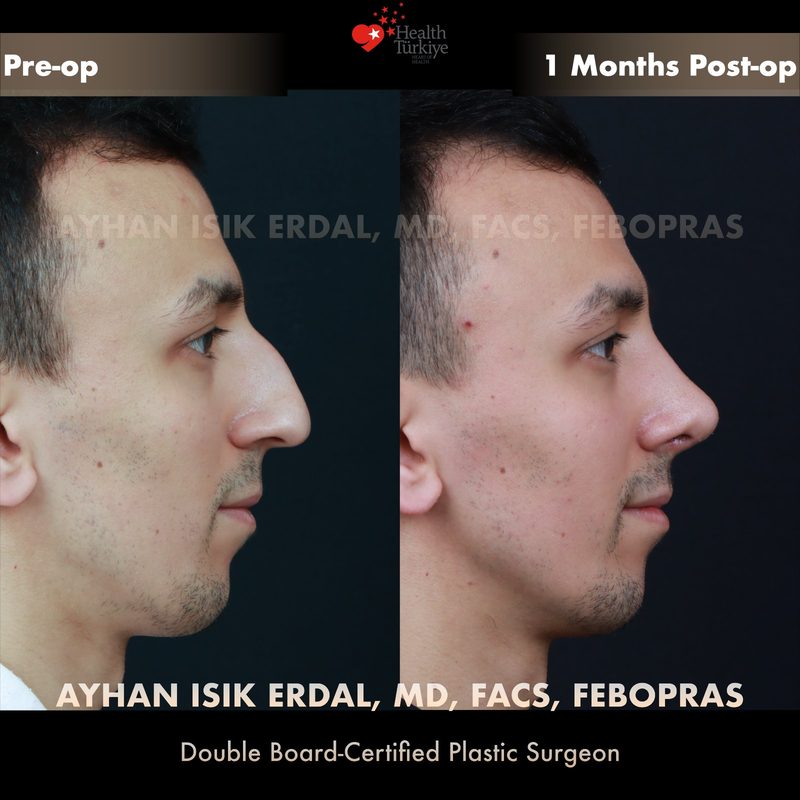
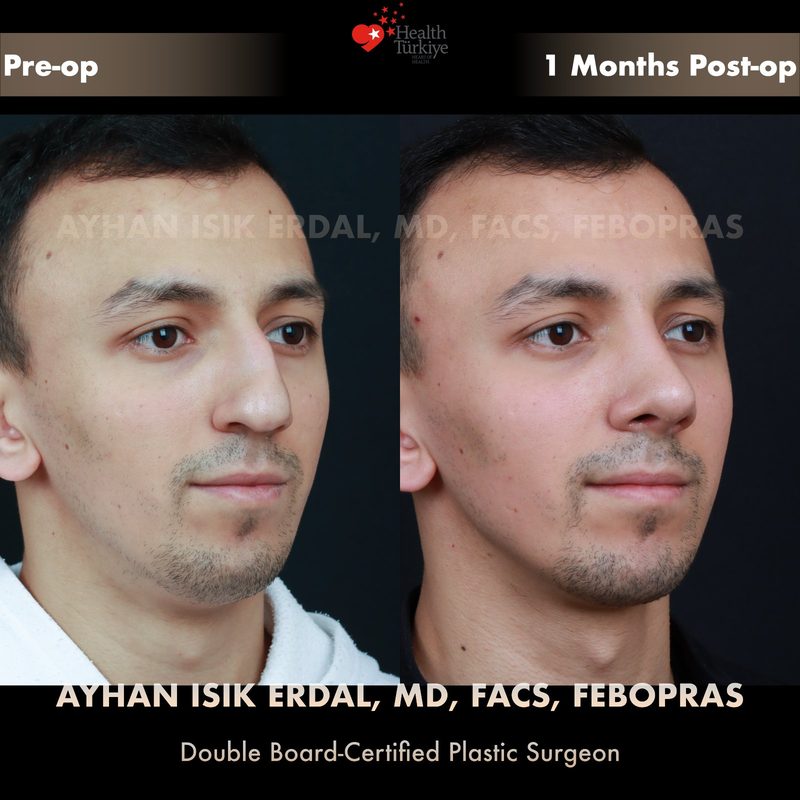
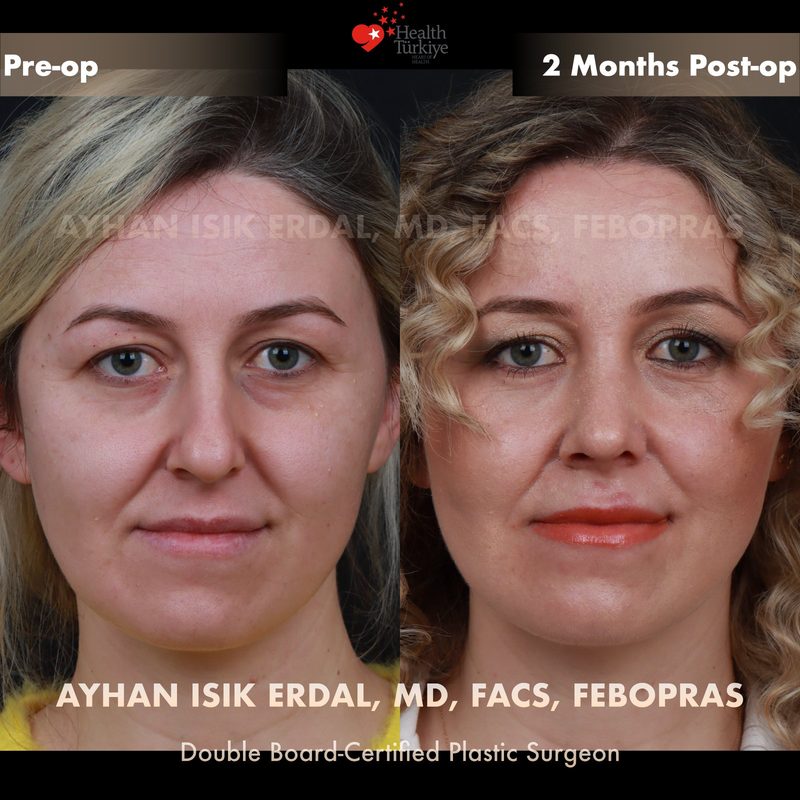
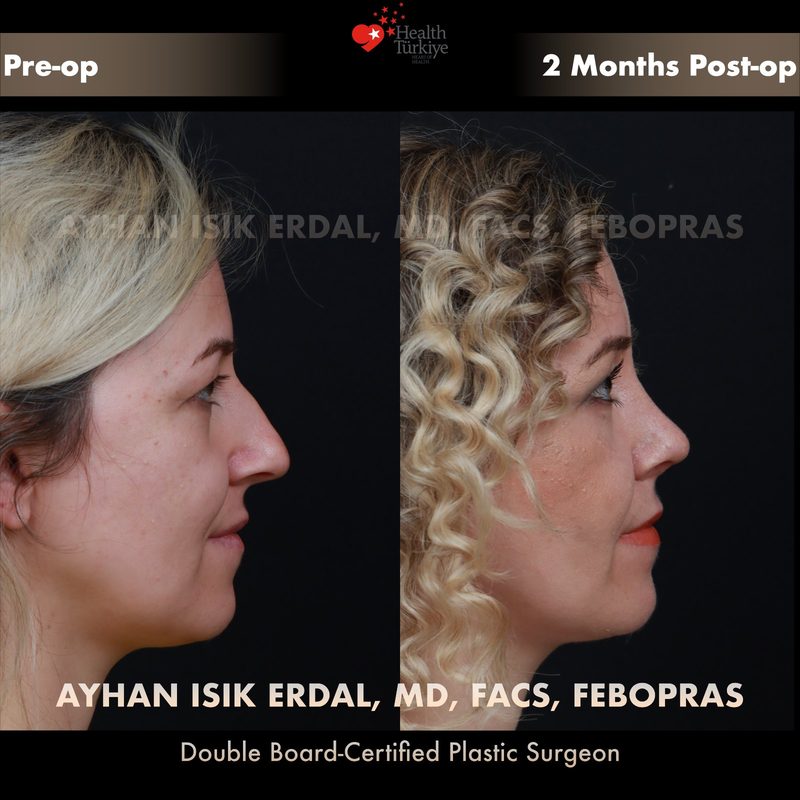
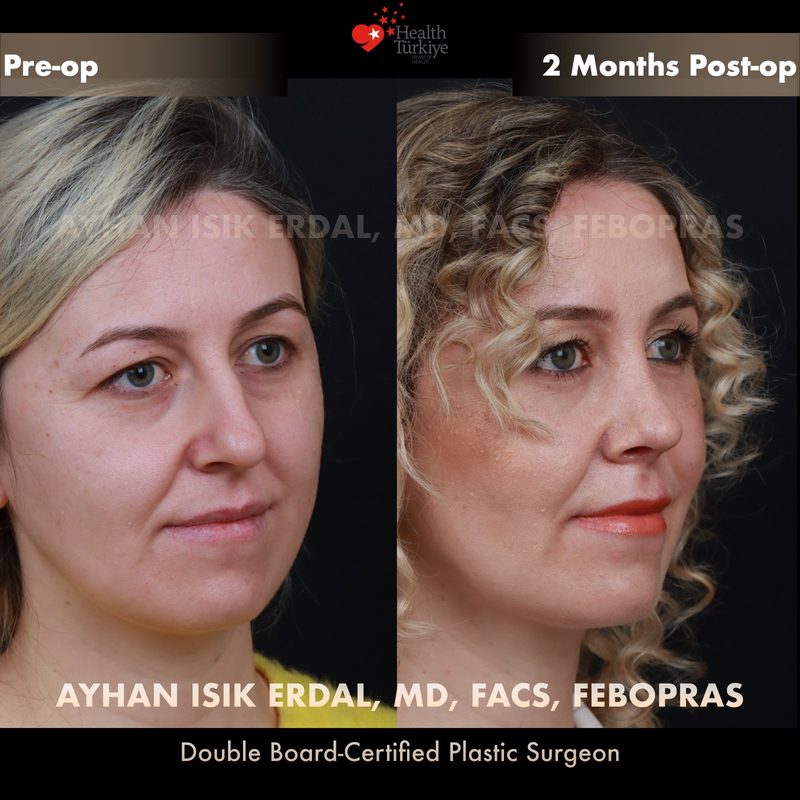
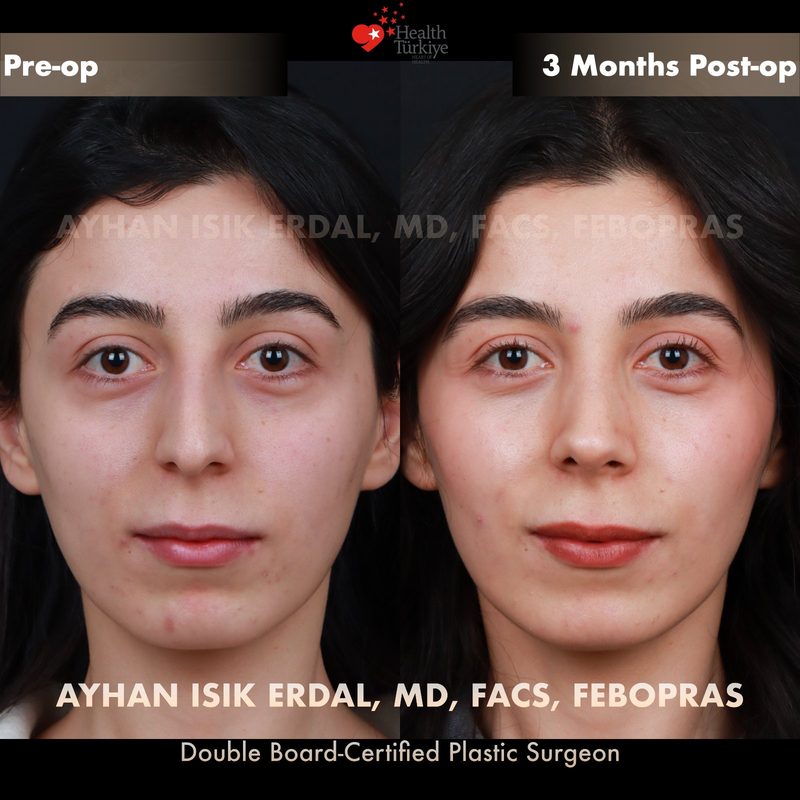
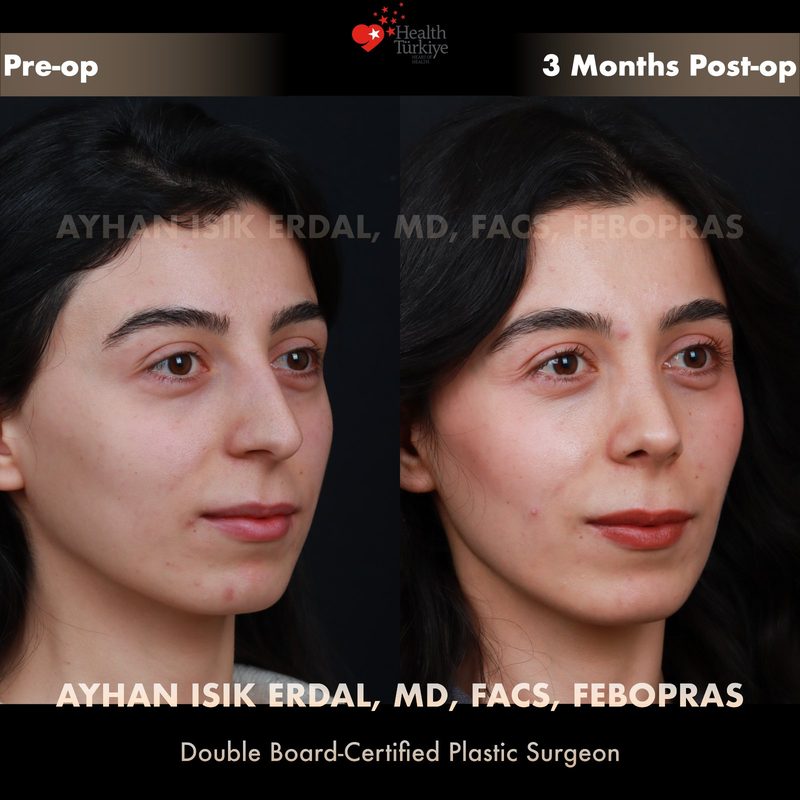
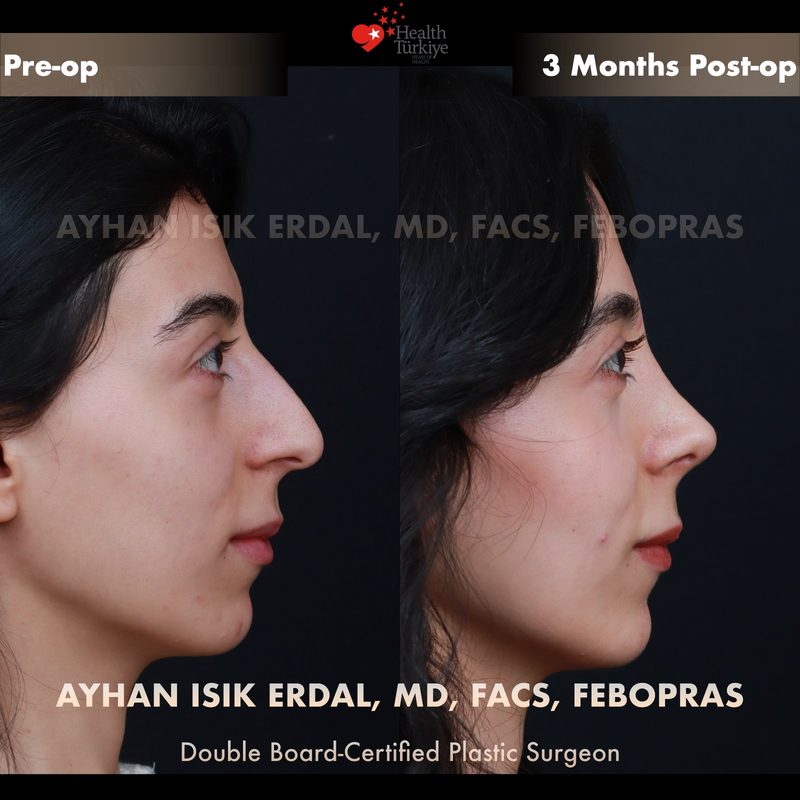
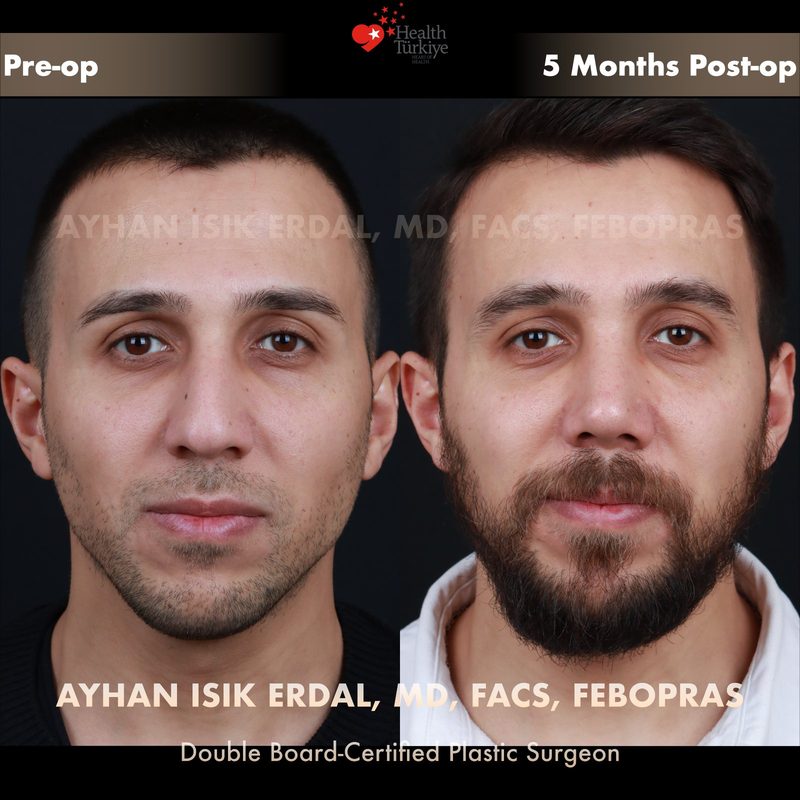
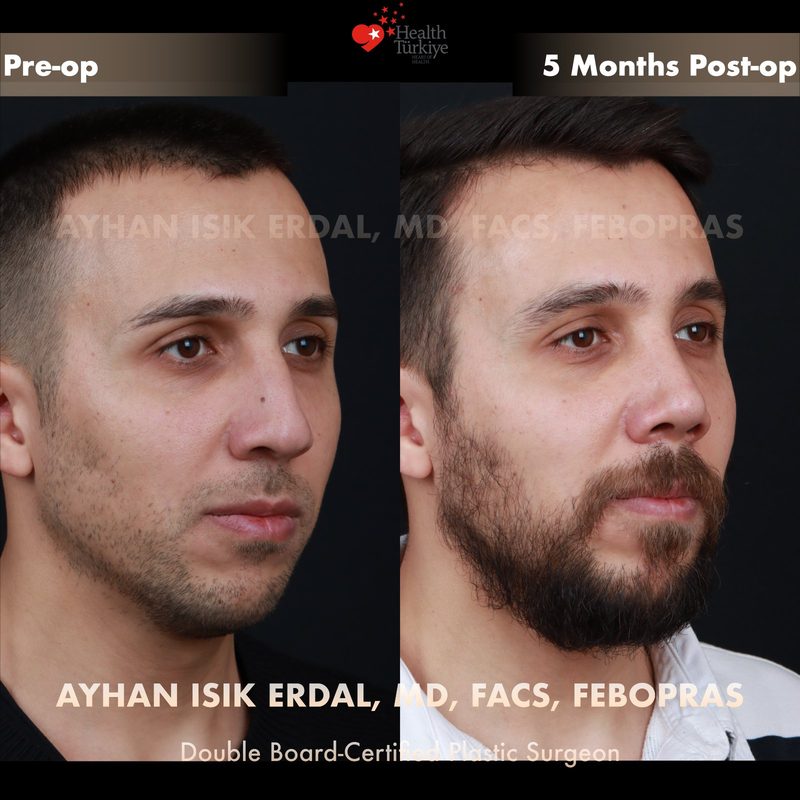
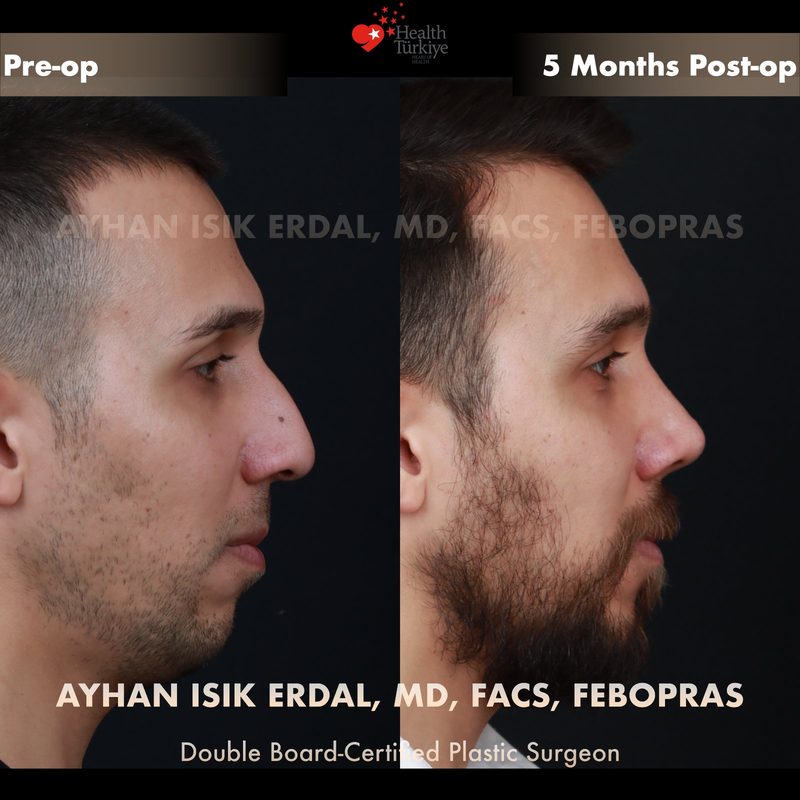
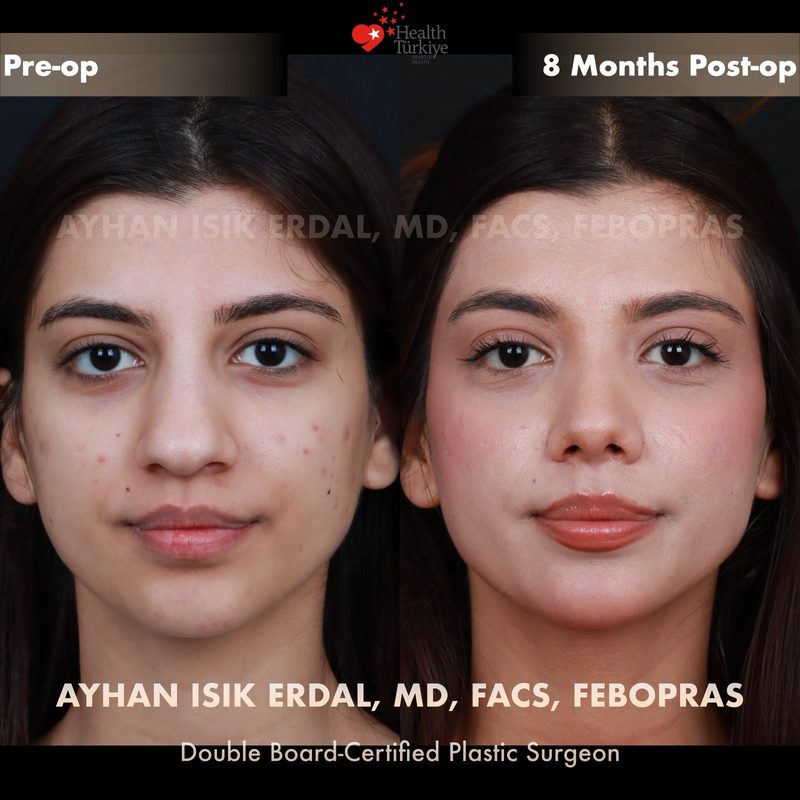
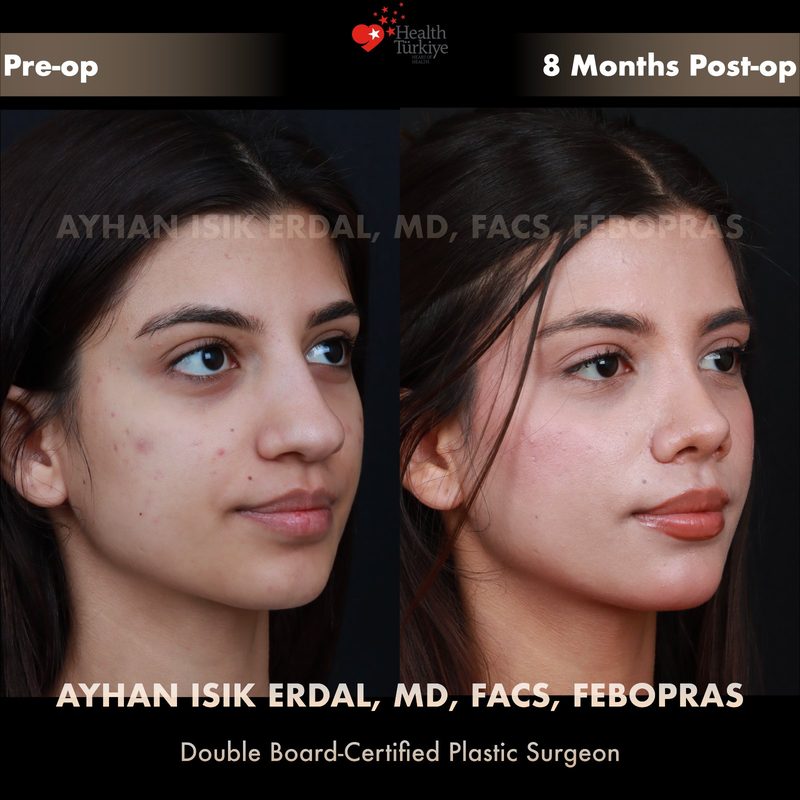
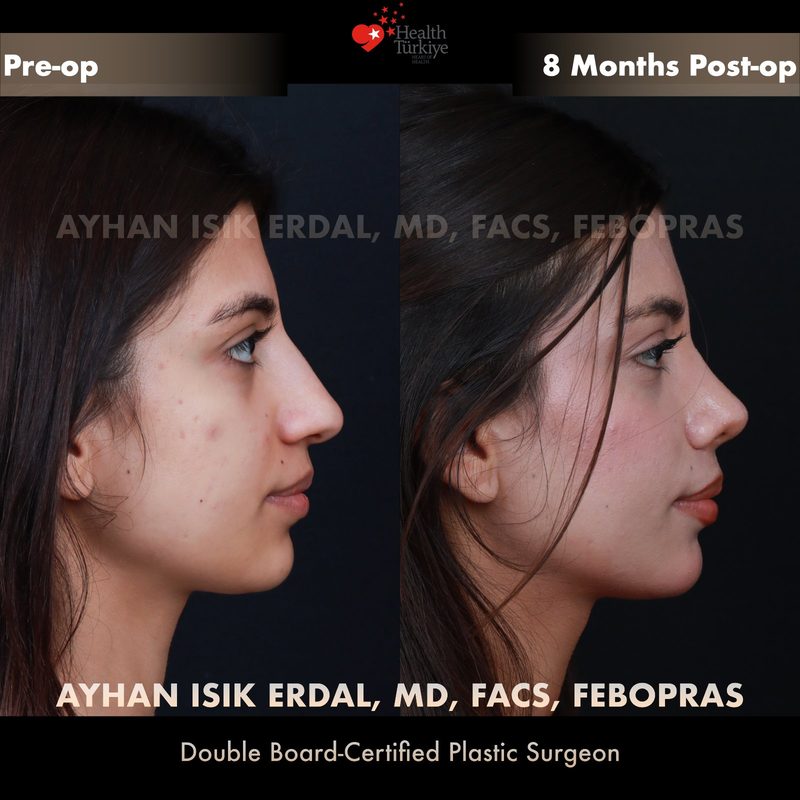
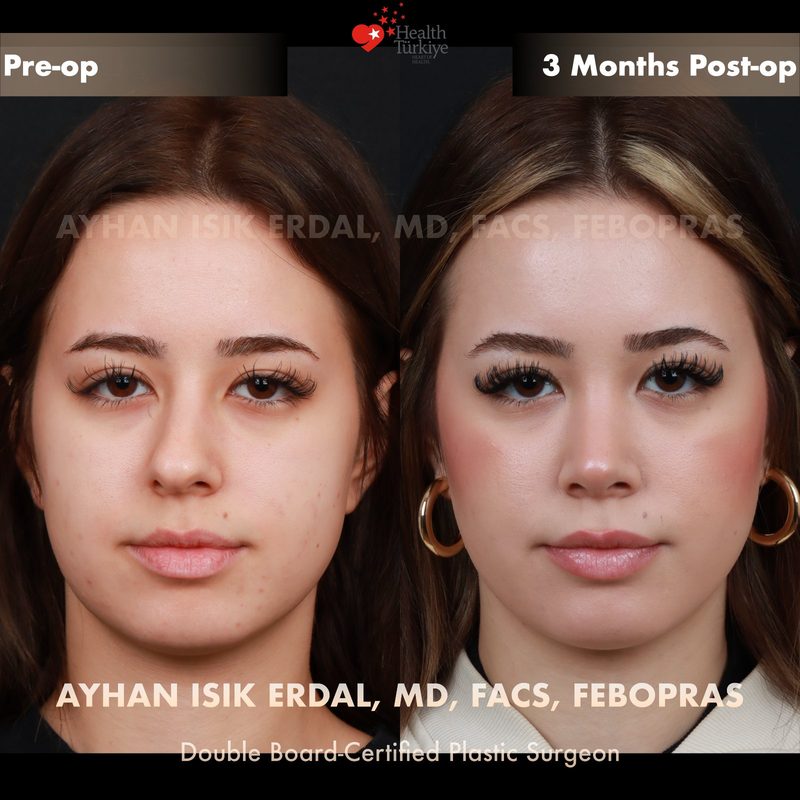
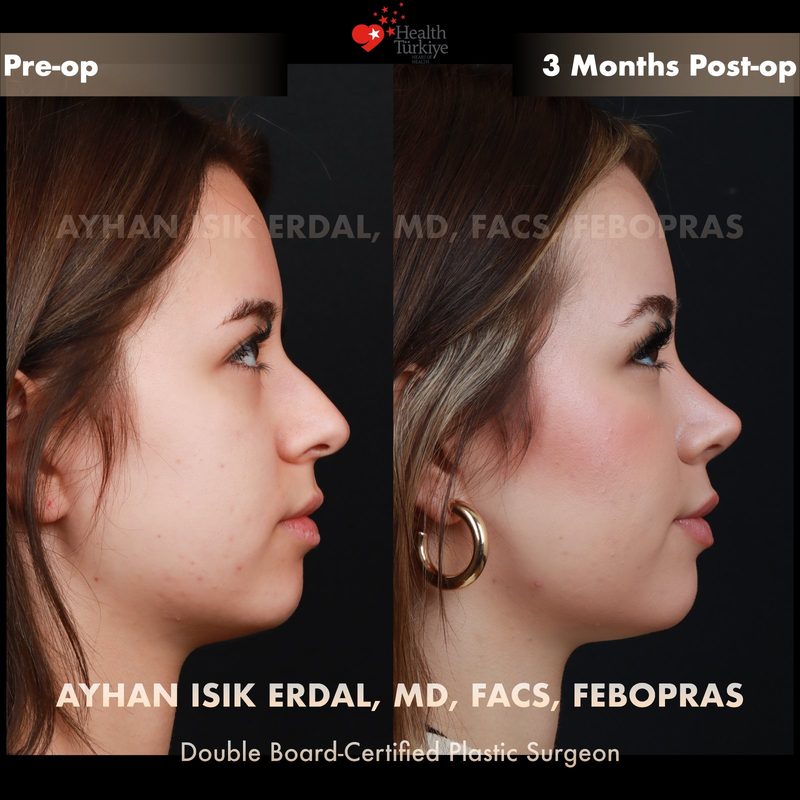
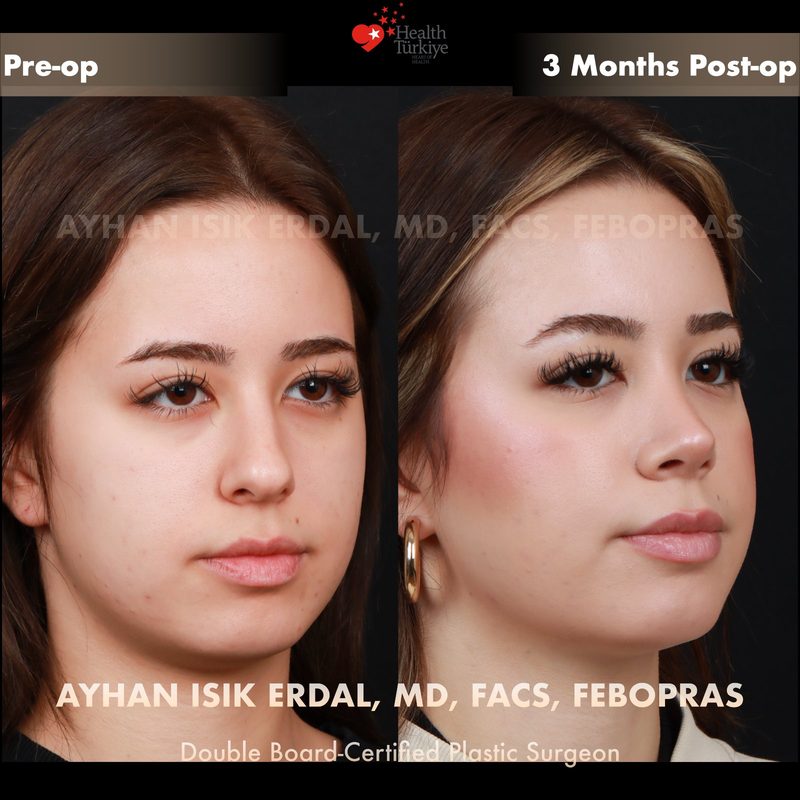
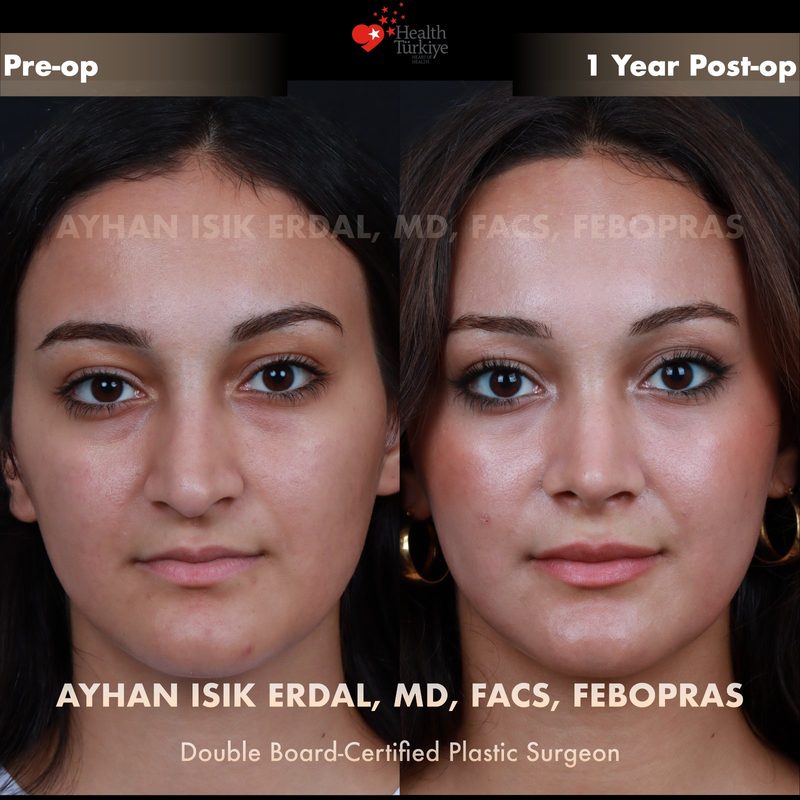
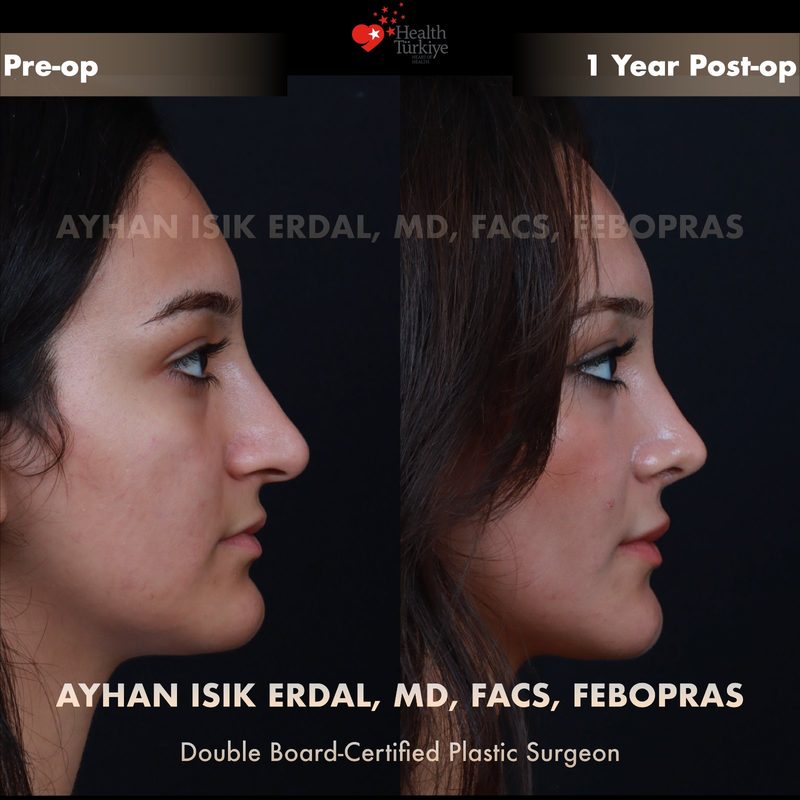
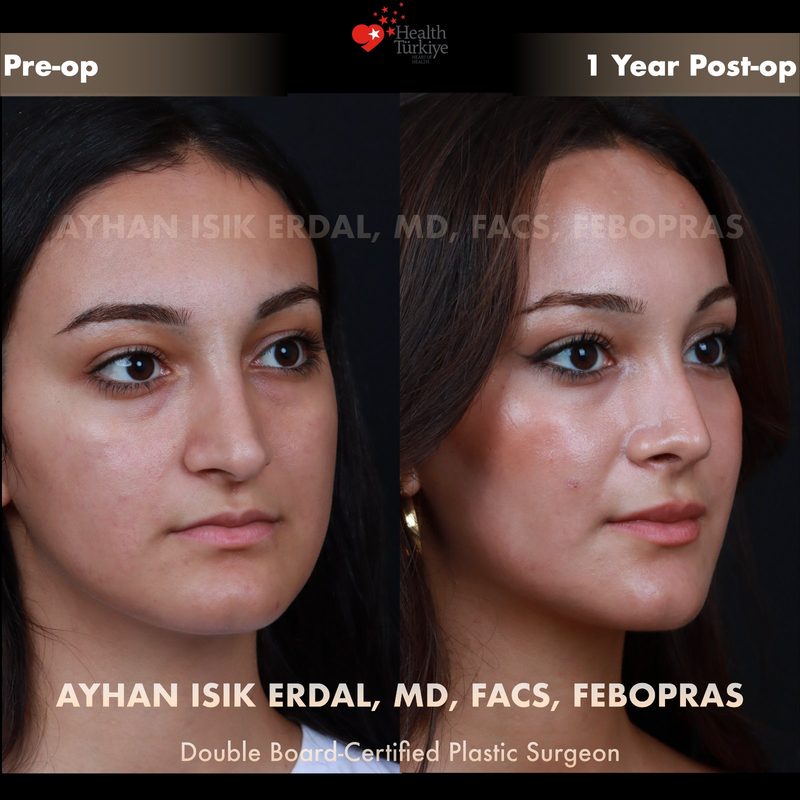
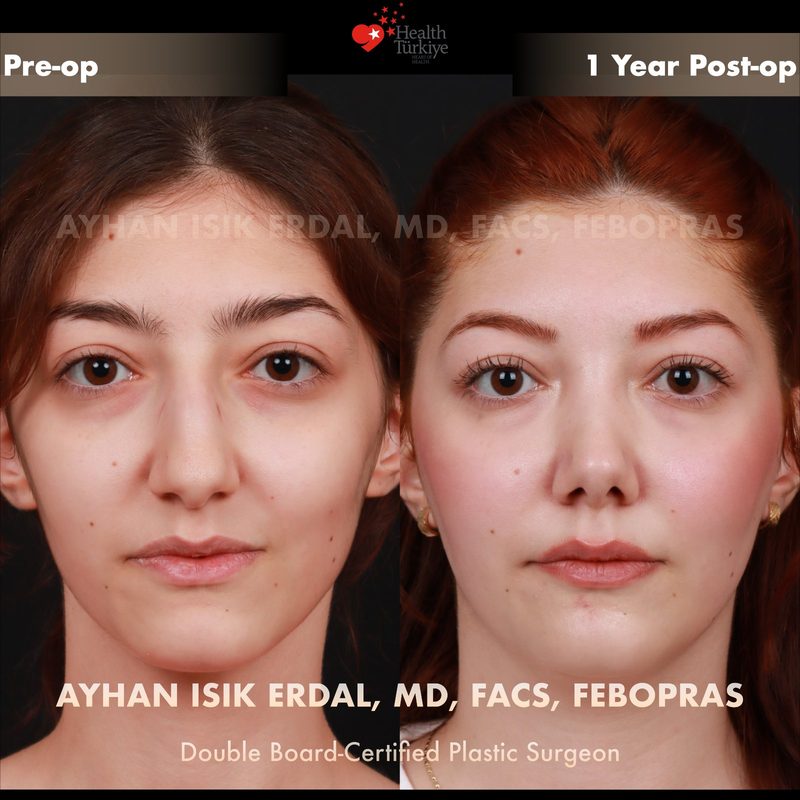
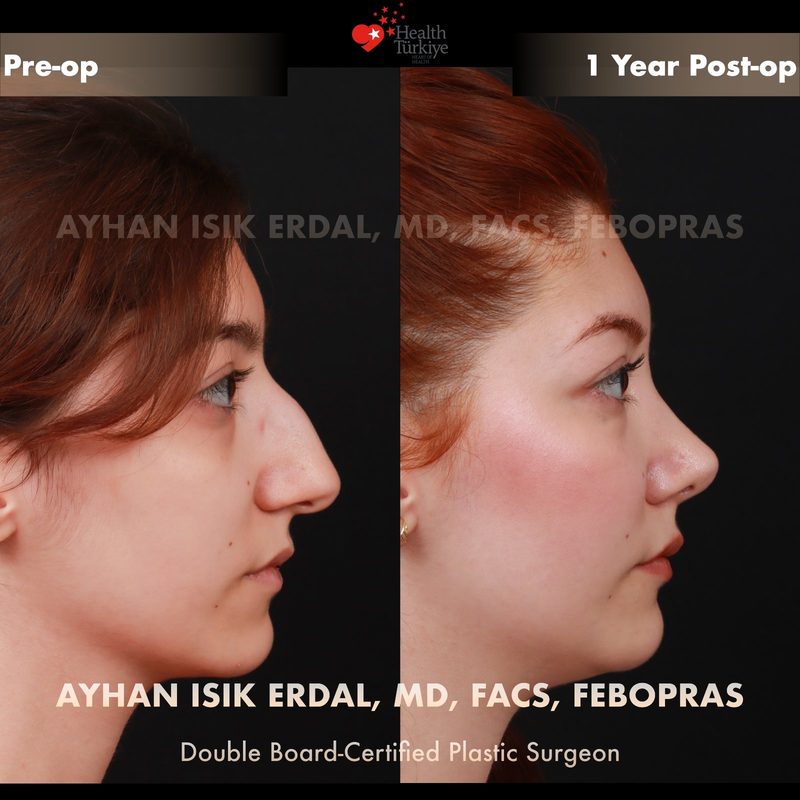
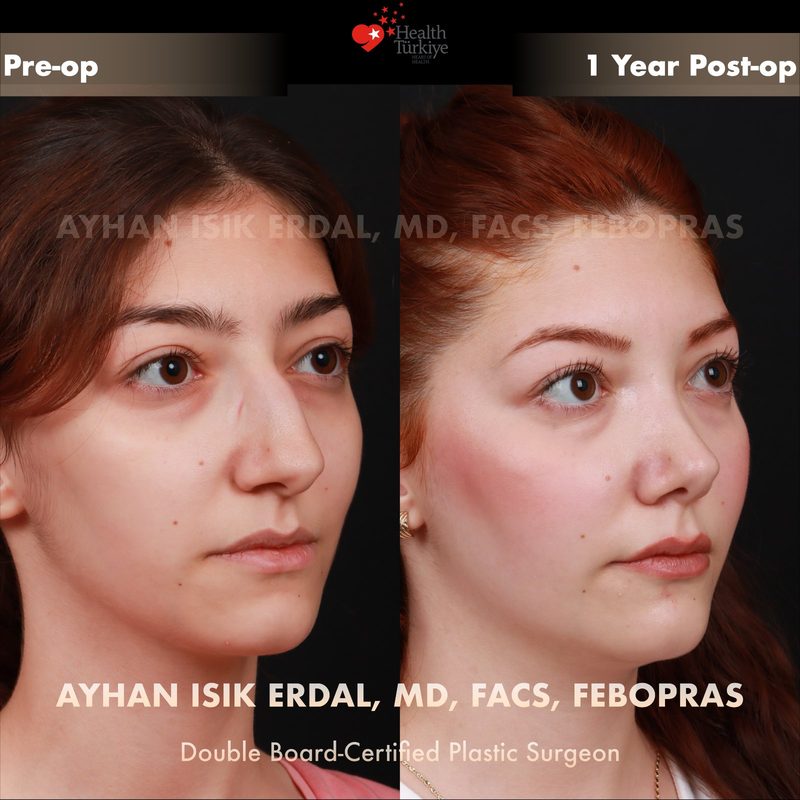
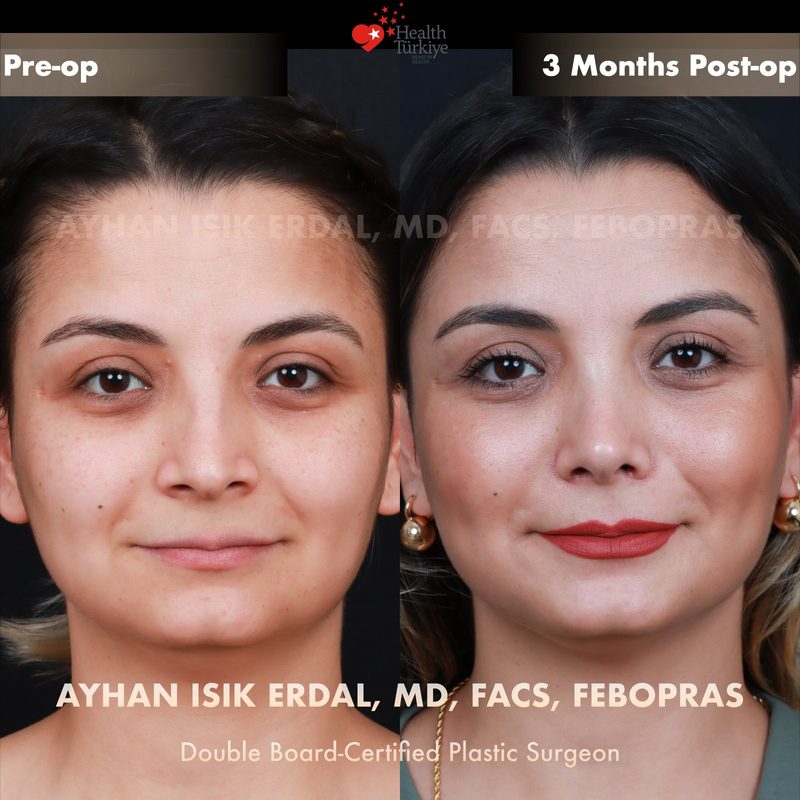
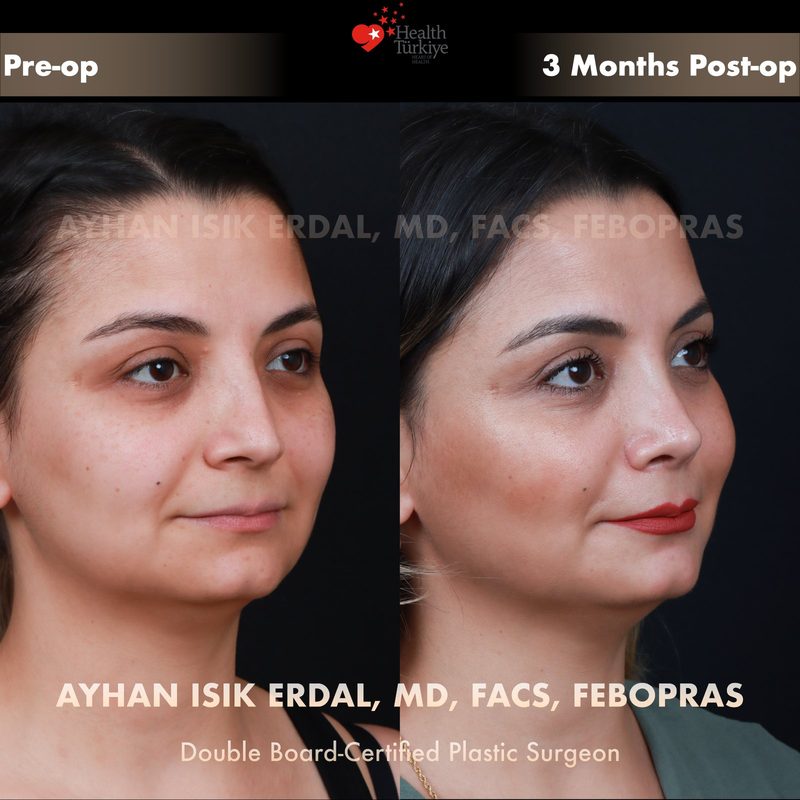
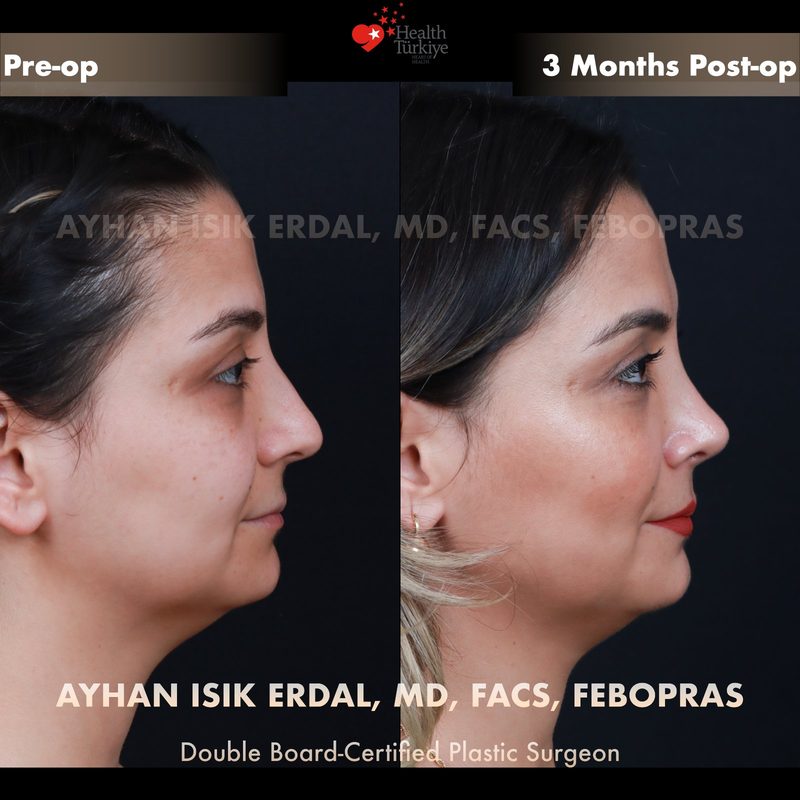
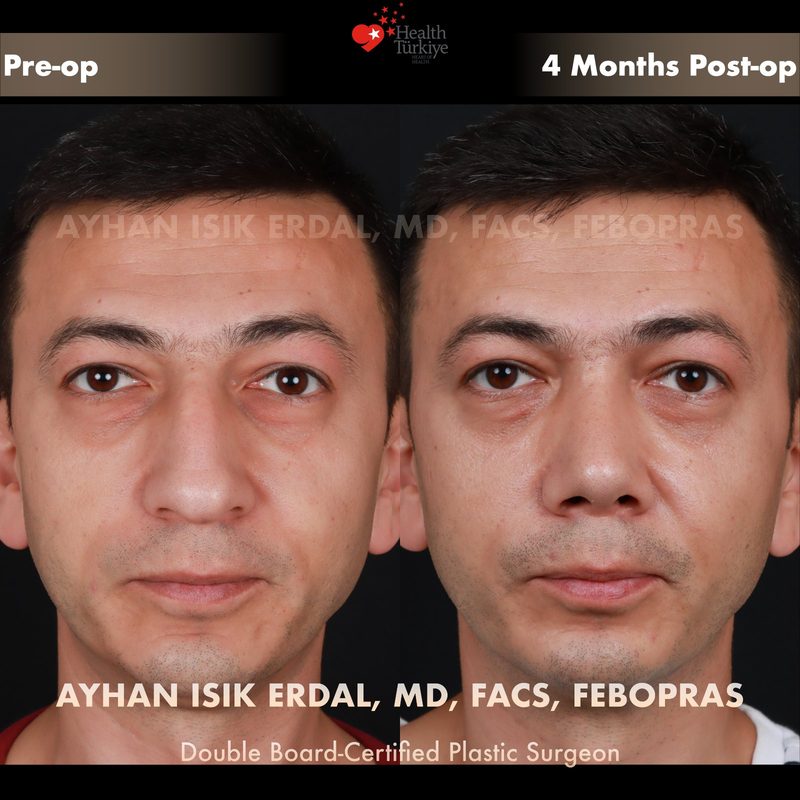
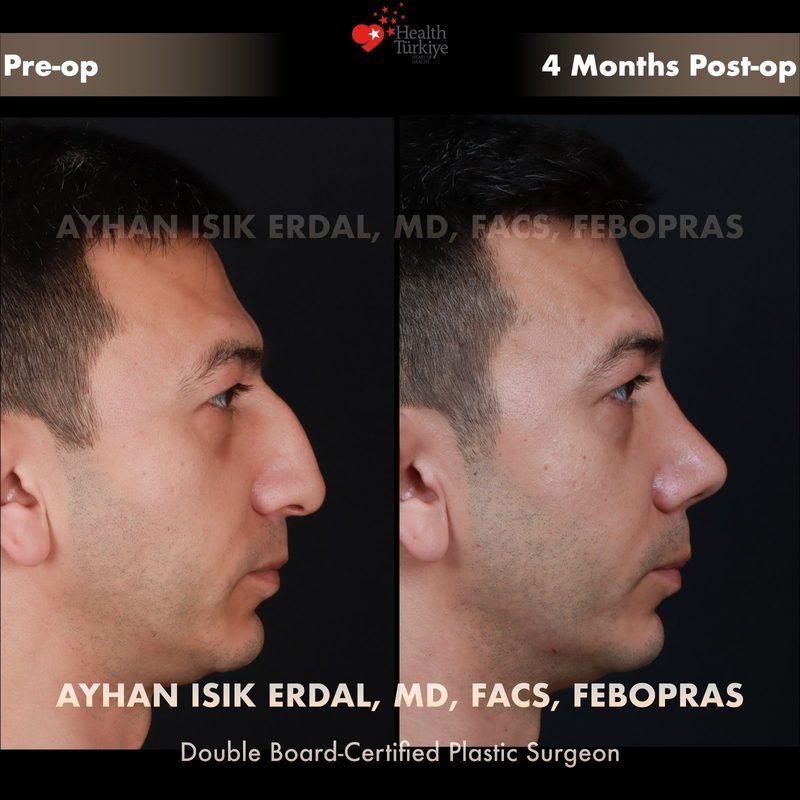
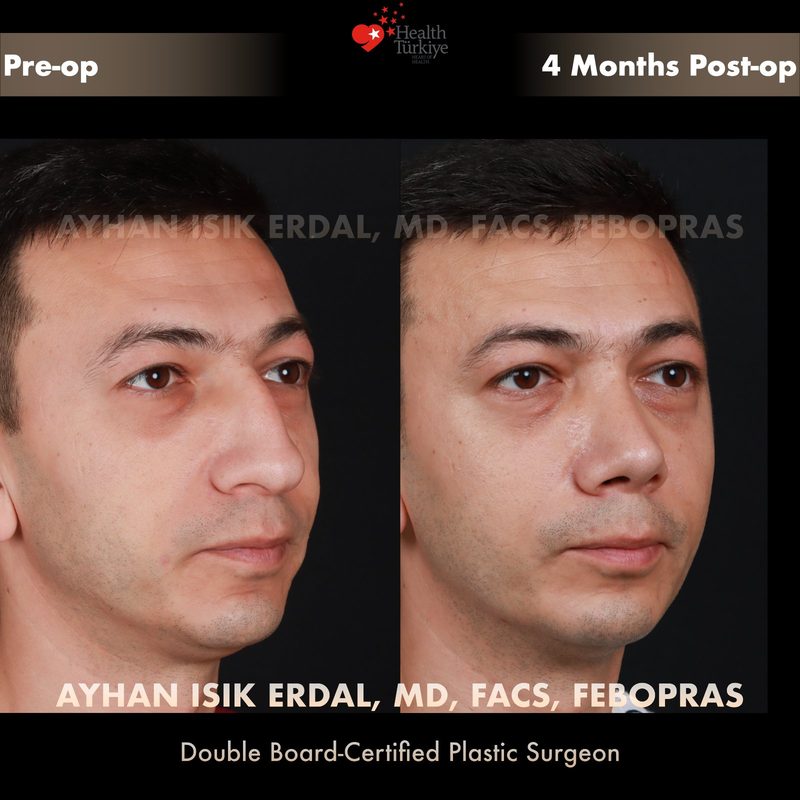
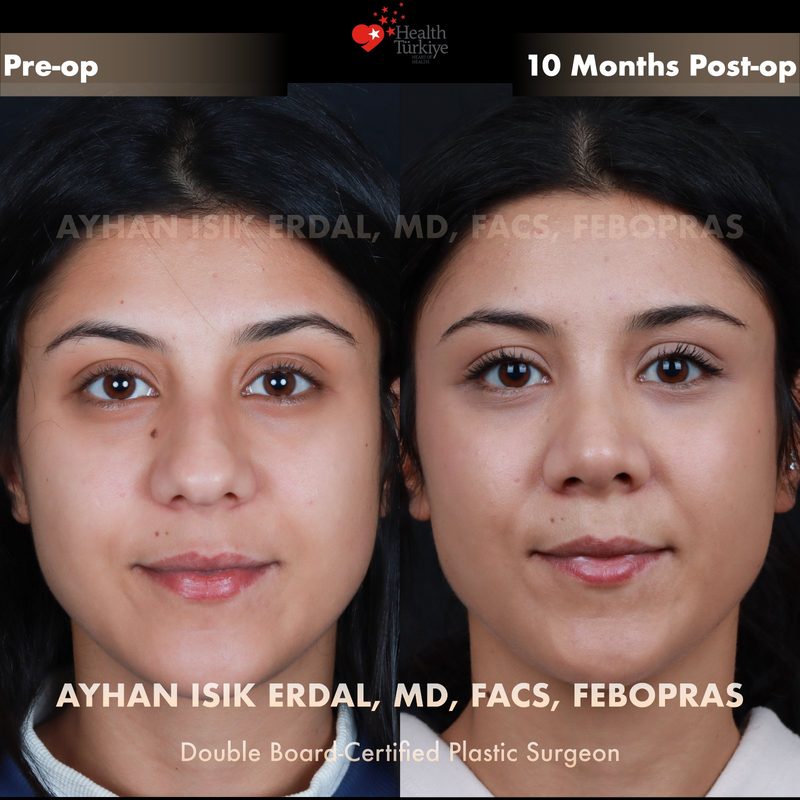
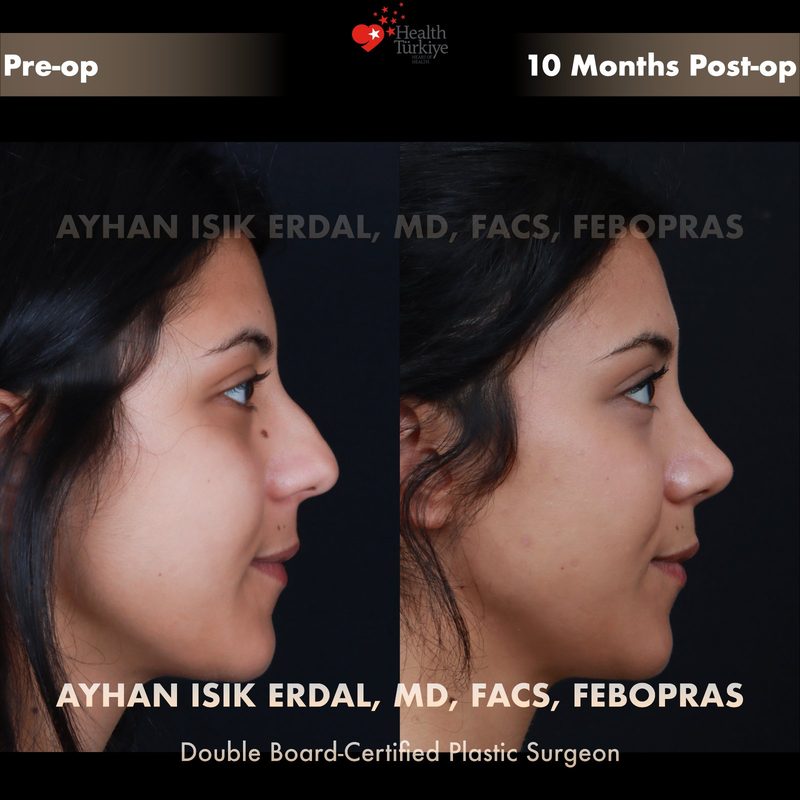
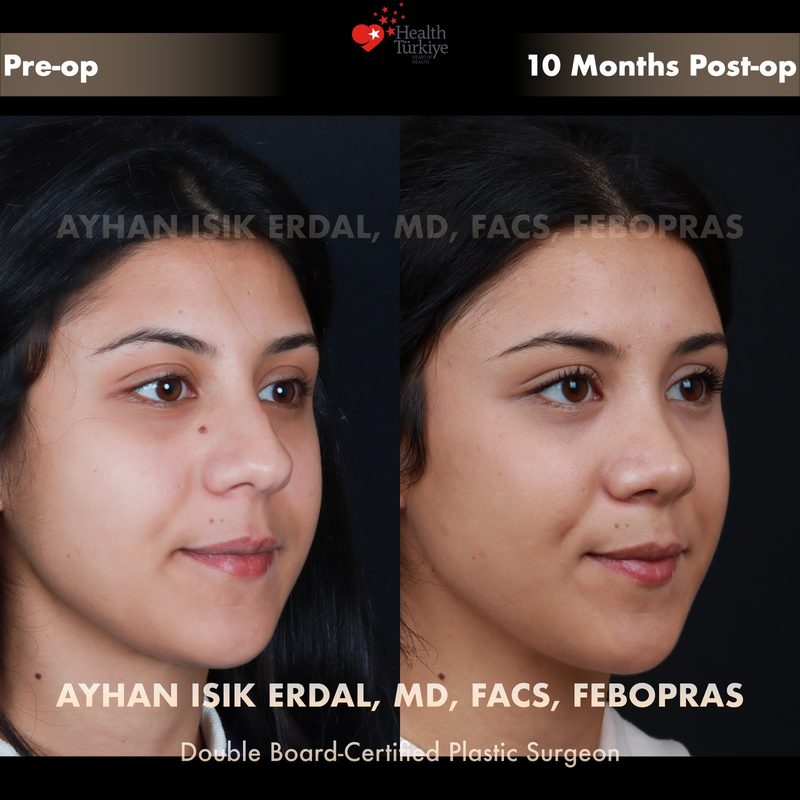
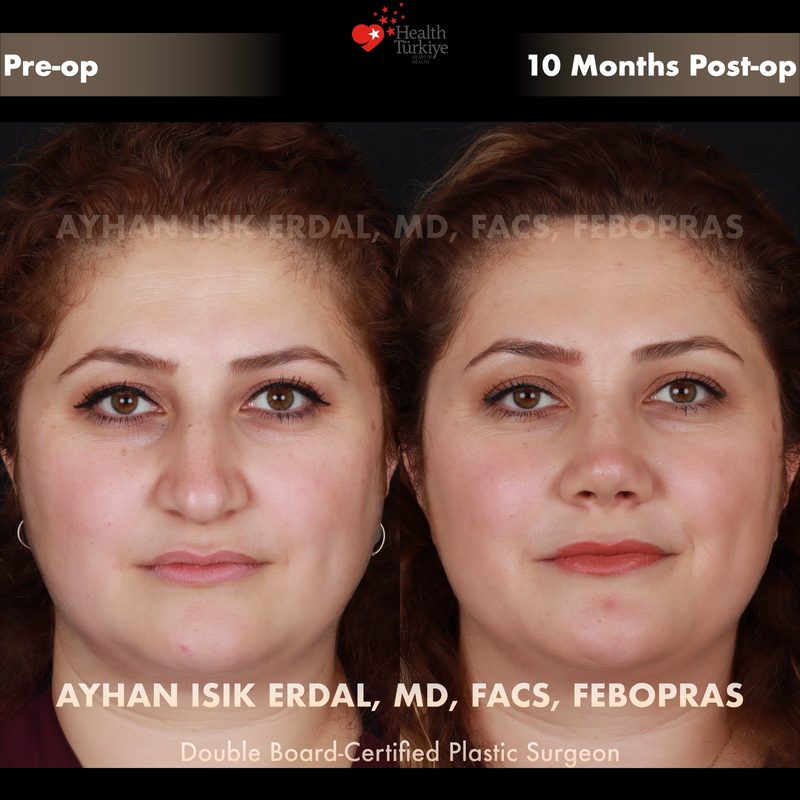
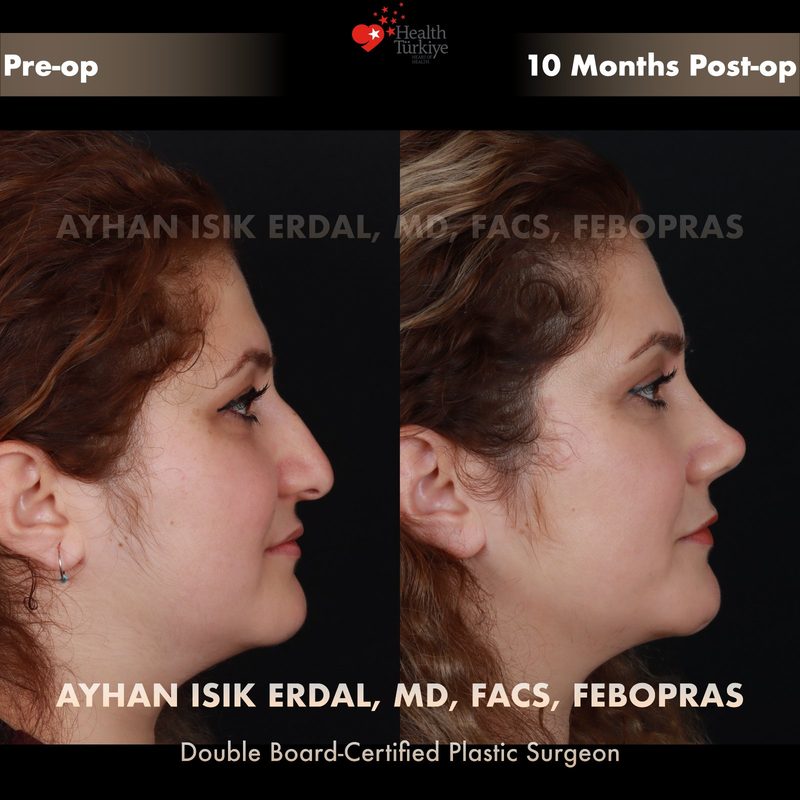
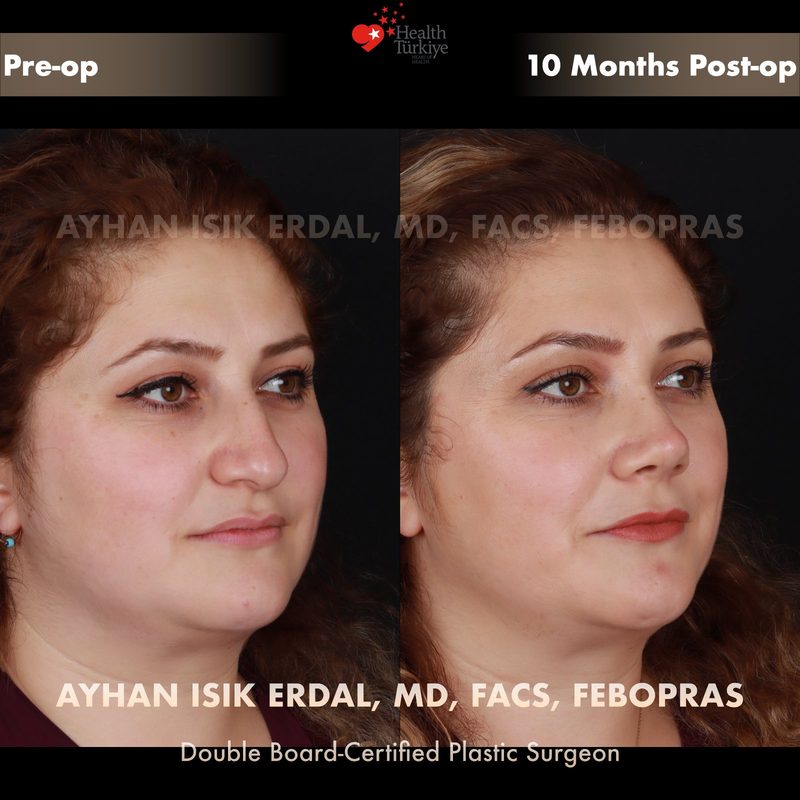
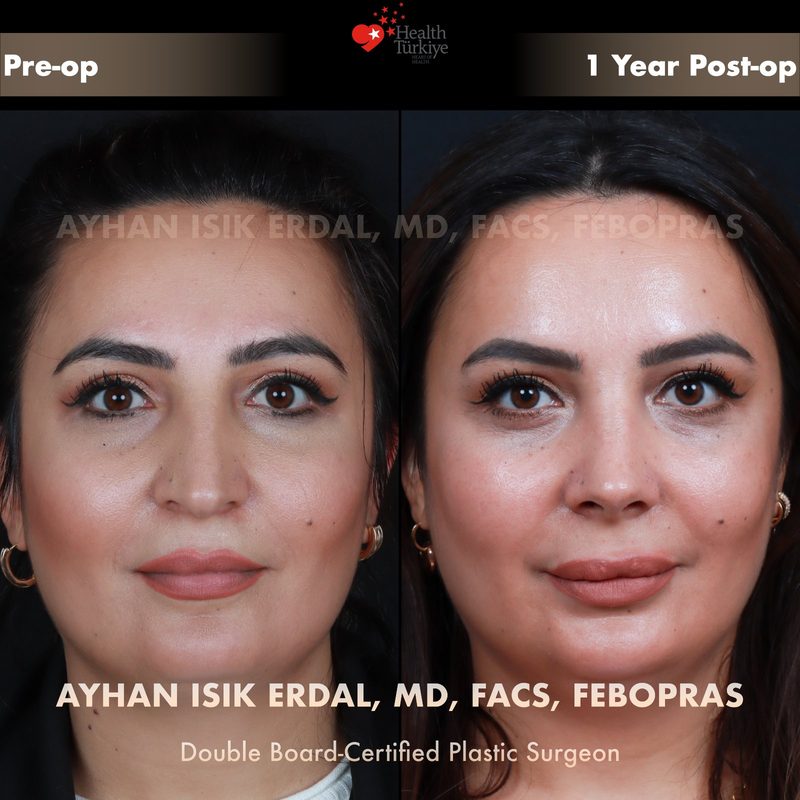
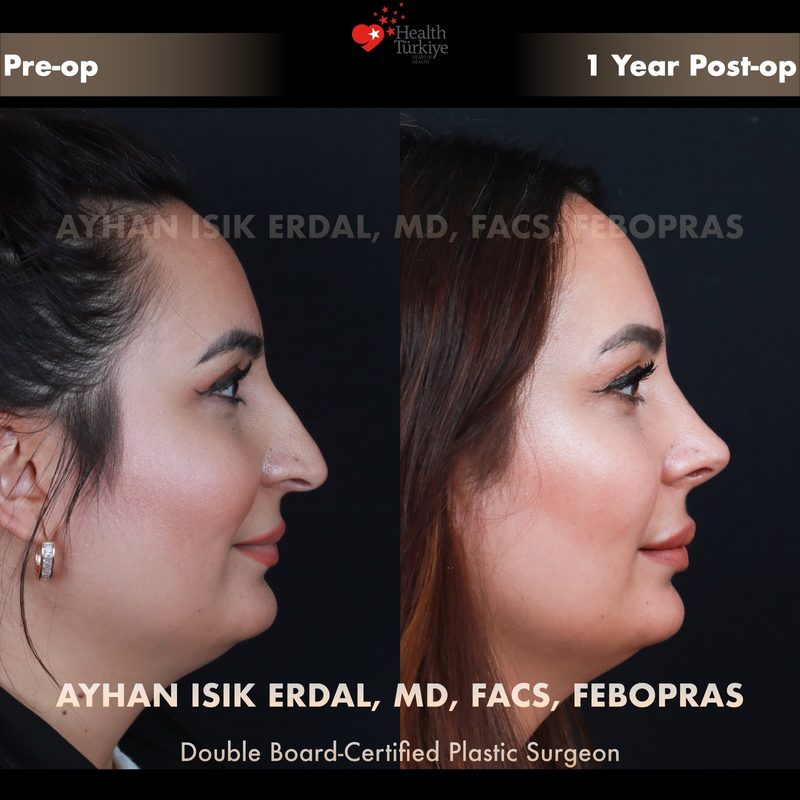
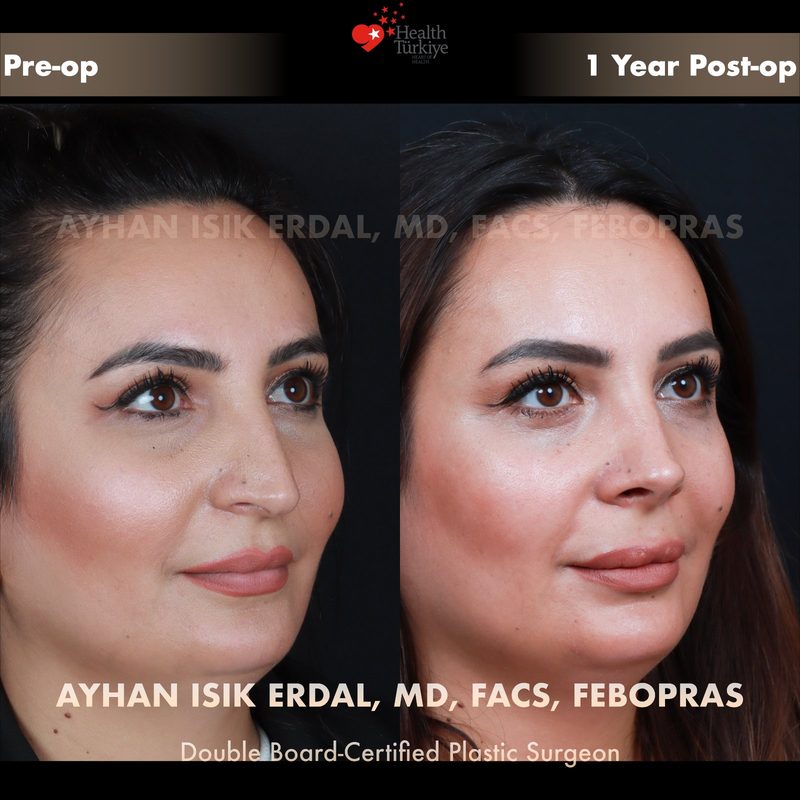
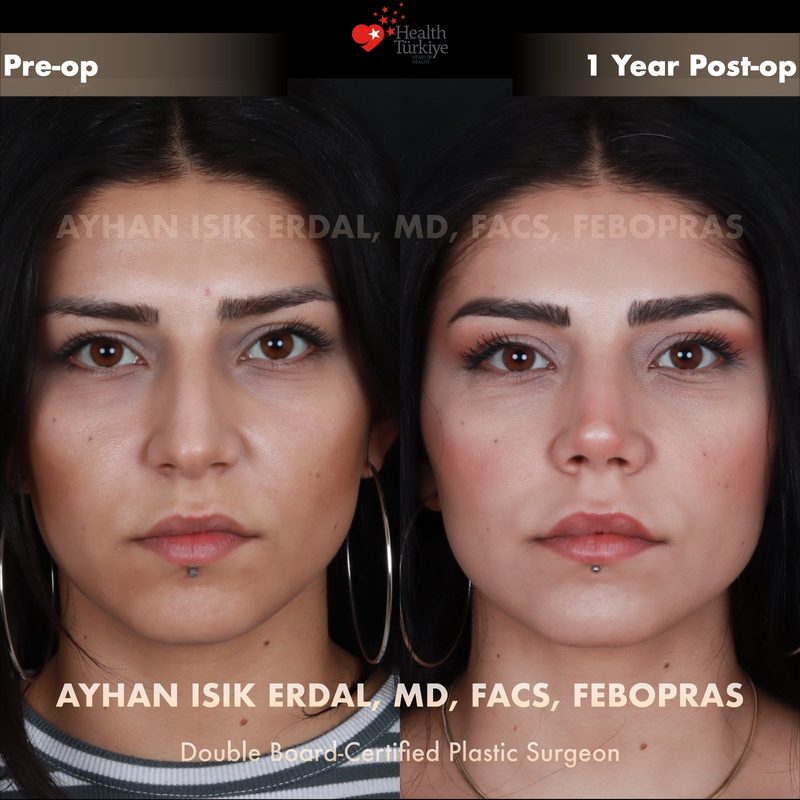
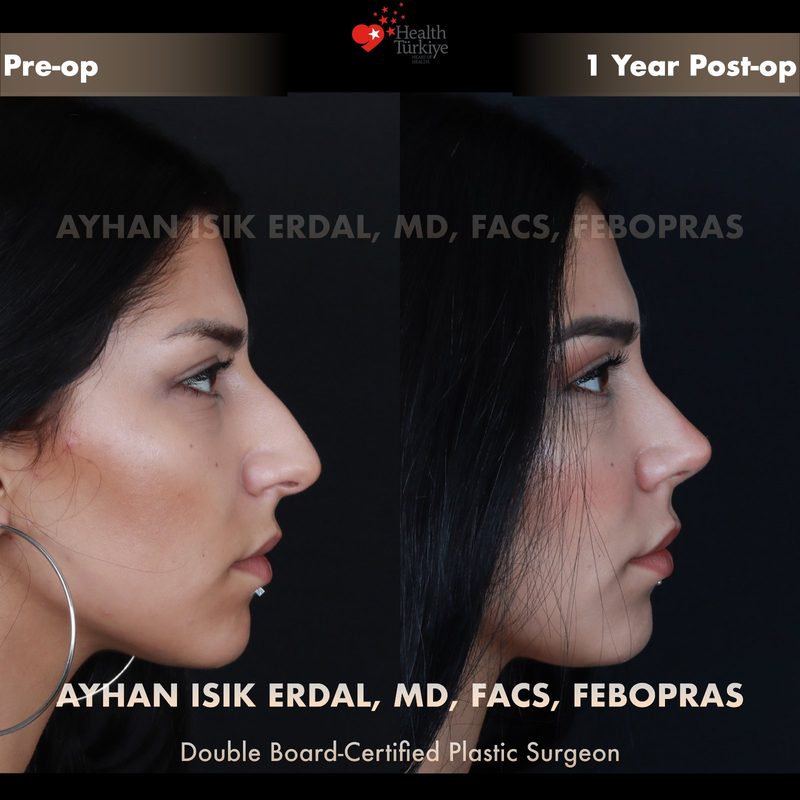
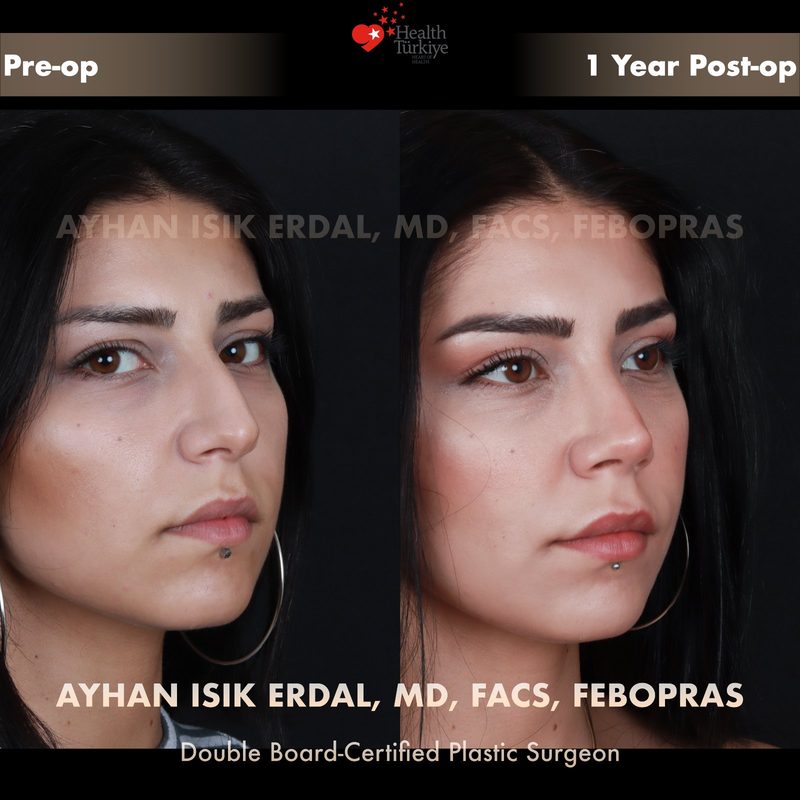
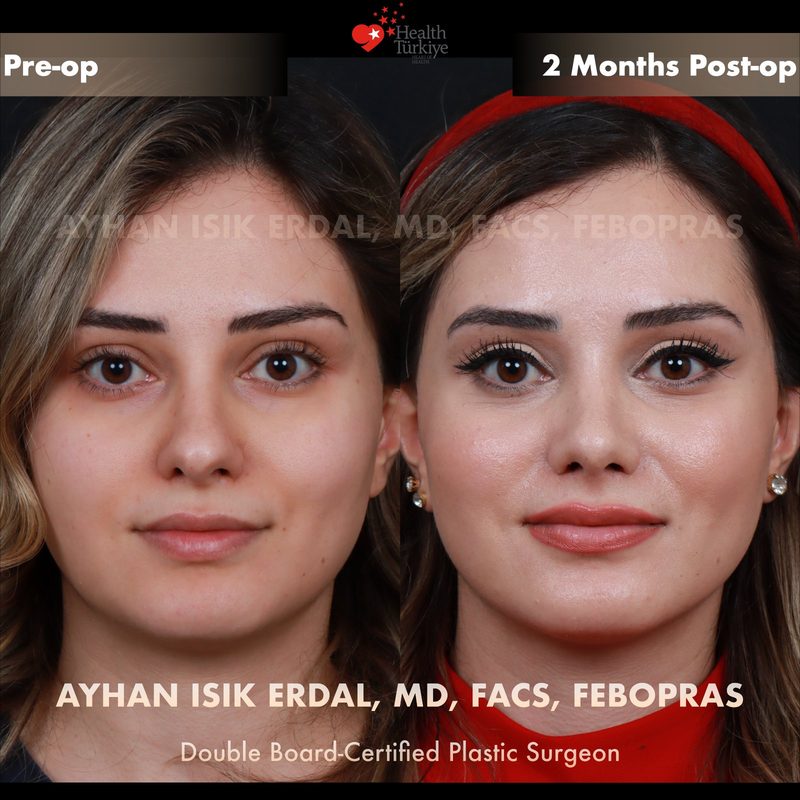
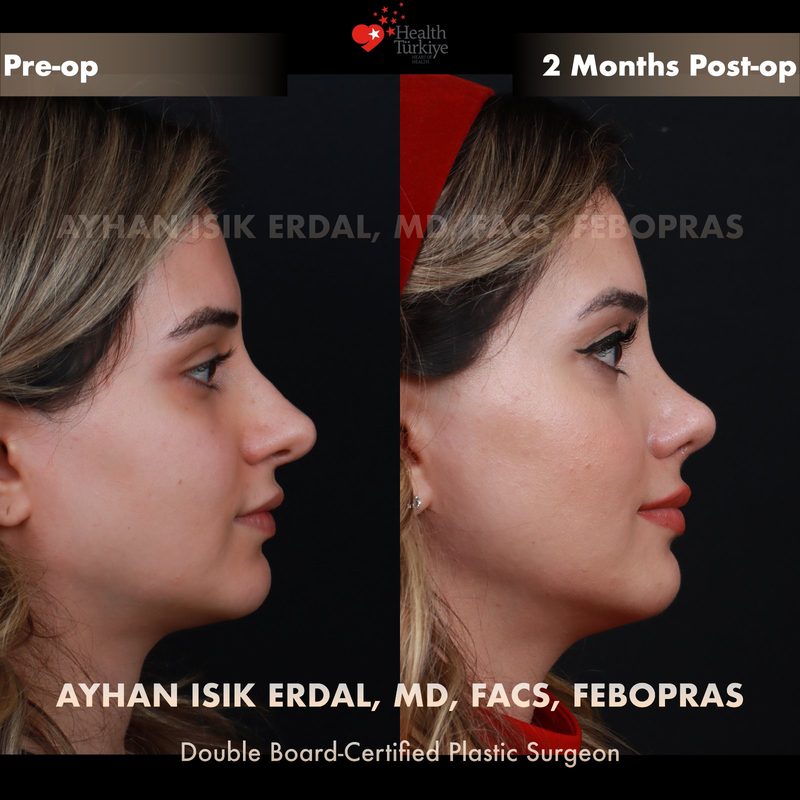
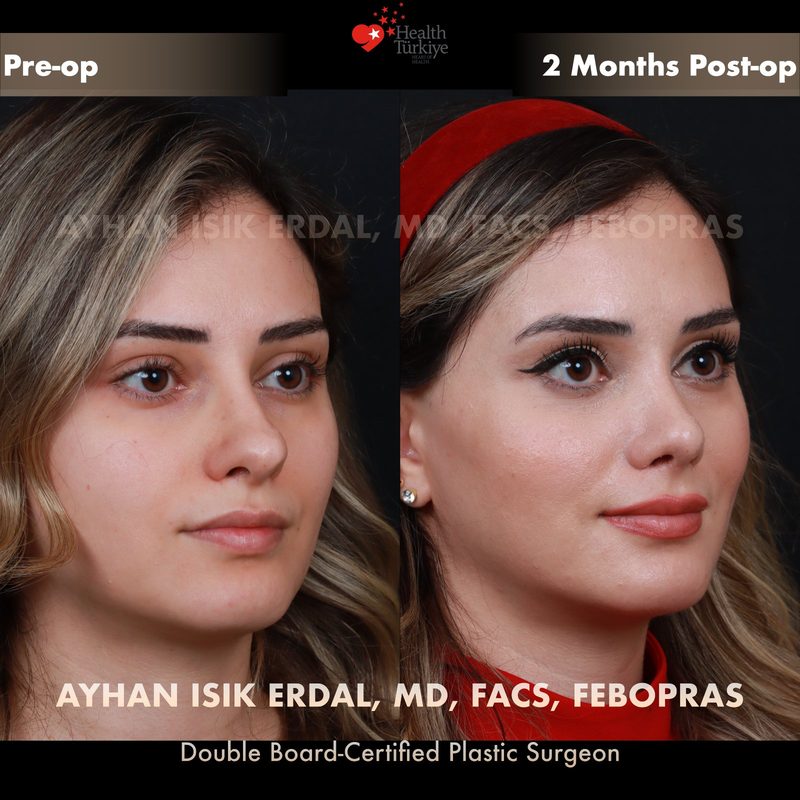
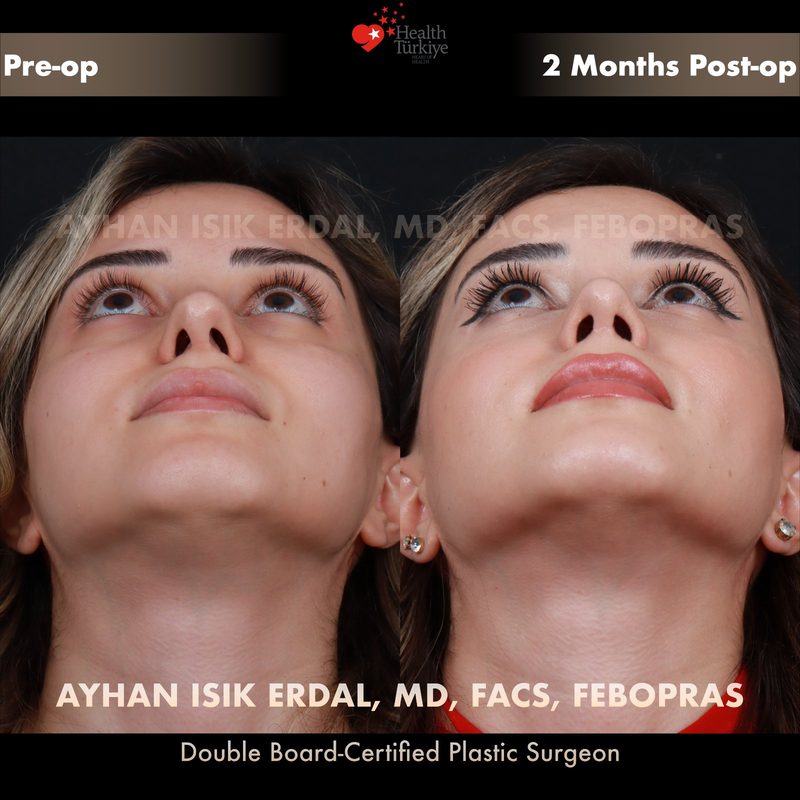
Before & After Gallery
Real patient results. Photos shared with patient consent. Individual results may vary.
Frequently Asked Questions
The splint is removed at 7-10 days. Social recovery takes about 10-14 days. Final results develop over 6-12 months.
Both techniques have advantages. The most important factor is the surgeon's experience with the chosen technique.
Yes, rhinoplasty is performed under general anesthesia at an accredited hospital. Surgery typically takes 1.5-3 hours.
Surgery is performed under general anesthesia, so no pain is felt during the procedure. Post-operative discomfort is typically milder than expected and well-managed with prescribed medication.
Glasses that rest on the nasal bridge should be avoided for at least 6-8 weeks. Contact lenses or tape-supported glasses can be used during this period.
This depends on the surgeon's preference and procedures performed. Some use silicone splints, others may not use packing at all. If used, packing is typically removed within 1-3 days.
Wait at least 12 months for the final result to emerge. Early swelling can be misleading. If concerns persist after full healing, revision rhinoplasty can be evaluated.
Yes, functional issues like septal deviation and valve problems can be addressed during the same procedure in suitable patients.
Flying is generally safe 7-10 days after surgery. Nasal dryness and pressure changes on long flights may cause mild discomfort.
The goal of rhinoplasty is always a natural, harmonious result. Dr. Erdal's approach emphasizes balance with facial features rather than a standardized look.
The choice depends on your nasal anatomy, desired changes, and surgeon's expertise. The most important factor is the surgeon's experience with their chosen technique.
Book a Consultation
For more information about Closed Rhinoplasty and to schedule a consultation, please get in touch.
WhatsApp